
Boiler Replacement Cost in BostonReal 2026 Pricing
Answer two quick questions and get an instant price range for your boiler replacement.
Get Your Boiler Price Range
Which best describes your project?
In 2026, most boiler replacements in the Boston area handled by licensed and insured plumbers cost between $8,000 and $18,000, depending on the system type, home heating load, and installation complexity. That range covers everything from a straightforward gas boiler swap to a full combi boiler conversion with new gas piping and venting.
If that sounds like a wide spread, it is. Boiler installations are more involved than water heater replacements. The system connects to every heating zone in your home, requires proper gas supply sizing, and needs to be vented according to Massachusetts code. The variation between a simple swap and a complex conversion is real, and any pricing guide that pretends otherwise is not being honest with you.
This page breaks down what boiler replacements actually cost in Greater Boston, what drives the price differences, and what to watch for when comparing quotes.
Typical Boiler Replacement Costs in Boston
| Boiler Type | Typical Cost Range |
|---|---|
| Gas Boiler (Like-for-Like Swap) | $9,000 – $17,000 |
| High-Efficiency Condensing Boiler | $11,000 – $19,000 |
| Combi Boiler Replacement (Heating + Hot Water) | $8,000 – $13,000 |
| Combi Boiler Conversion (From Separate Boiler + Tank) | $10,000 – $18,000 |
| Oil-to-Gas Boiler Conversion | $12,000 – $20,000+ |
These ranges reflect typical replacement pricing across Boston, Newton, Brookline, Cambridge, Watertown, Waltham, and surrounding communities. For professional boiler replacement in Boston, contact our licensed team.
A Note on Equipment Grade
The pricing in this guide assumes professional-grade boiler equipment from manufacturers like Navien and Rinnai, not bargain-tier units sourced from the cheapest distributor.
There is a meaningful difference between a combi boiler that costs a contractor $2,800 wholesale and one that costs $1,400. The cheaper units cut corners on heat exchangers, internal components, and control boards. They work fine for the first year or two, then start generating service calls. The equipment we install is designed to run reliably for 15 to 20 years in cold-climate conditions. That matters when you are heating a home through a Boston winter.
Why Boiler Replacement Costs More in Boston
If you have searched around online, you have probably seen national articles quoting boiler replacement costs in the $4,000 to $7,000 range. Those numbers do not reflect what the job actually costs in Greater Boston. Here is why.
- Labor rates are higher here. Licensed plumbers in the Boston metro area command some of the highest wages in the country. The cost of living drives this, and it is reflected in every quote you receive from a legitimate contractor.
- Insurance and licensing requirements are strict. Massachusetts requires plumbing licenses, gas fitting licenses, and substantial liability insurance. Contractors who carry proper coverage build those costs into their pricing because they have to.
- Boston homes are old and complicated. Triple-deckers, Victorians, brownstones, and post-war colonials dominate the housing stock. These homes have tight basements, non-standard piping, and venting configurations that were installed decades ago. Nothing is straightforward.
- Access and logistics add time. Parking is a nightmare. Carrying a 250-pound cast iron boiler up narrow basement stairs takes longer than rolling one across a flat Texas garage. Street permits, building access, and tight working conditions all add to the clock.
- Permits and inspections are mandatory. Every gas-fired boiler installation requires a permit and an inspection by the local gas inspector. This is non-negotiable in Massachusetts and adds both cost and scheduling coordination to every project.
National pricing averages are meaningless for Boston homeowners. They blend data from places where a plumber charges $60 an hour and works in wide-open new construction basements. That is a completely different job than replacing a boiler in a 1920s Brookline basement with six-foot ceilings and original cast iron piping.
Cost Breakdown by Boiler Type
Standard Gas Boiler Replacement Cost
Cost Range: $9,000 – $17,000
This is the most common boiler job we handle. The old unit comes out, the new one goes in the same spot, and the existing piping and venting are reused or minimally modified. Typical scenarios include replacing a 20-year-old cast iron boiler with a modern wall-hung unit, or swapping out a floor-standing boiler that has reached the end of its useful life. The price depends on the size of the unit, the condition of the existing connections, and whether any piping needs to be reworked.
High-Efficiency Condensing Boiler Cost
Cost Range: $11,000 – $19,000
Condensing boilers extract additional heat from exhaust gases, pushing efficiency above 95%. They vent through PVC pipe instead of a chimney, which means the old chimney liner or B-vent gets abandoned and new PVC intake and exhaust lines are run. This venting change is the biggest factor in the higher cost compared to a non-condensing swap. Condensing boilers also produce acidic condensate that needs to be routed to a drain or neutralizer. For homes where the boiler is far from a drain, this adds plumbing work. The payback comes through lower gas bills every heating season, which is significant given how long Boston winters run.
Combi Boiler Replacement Cost
Cost Range: $8,000 – $13,000
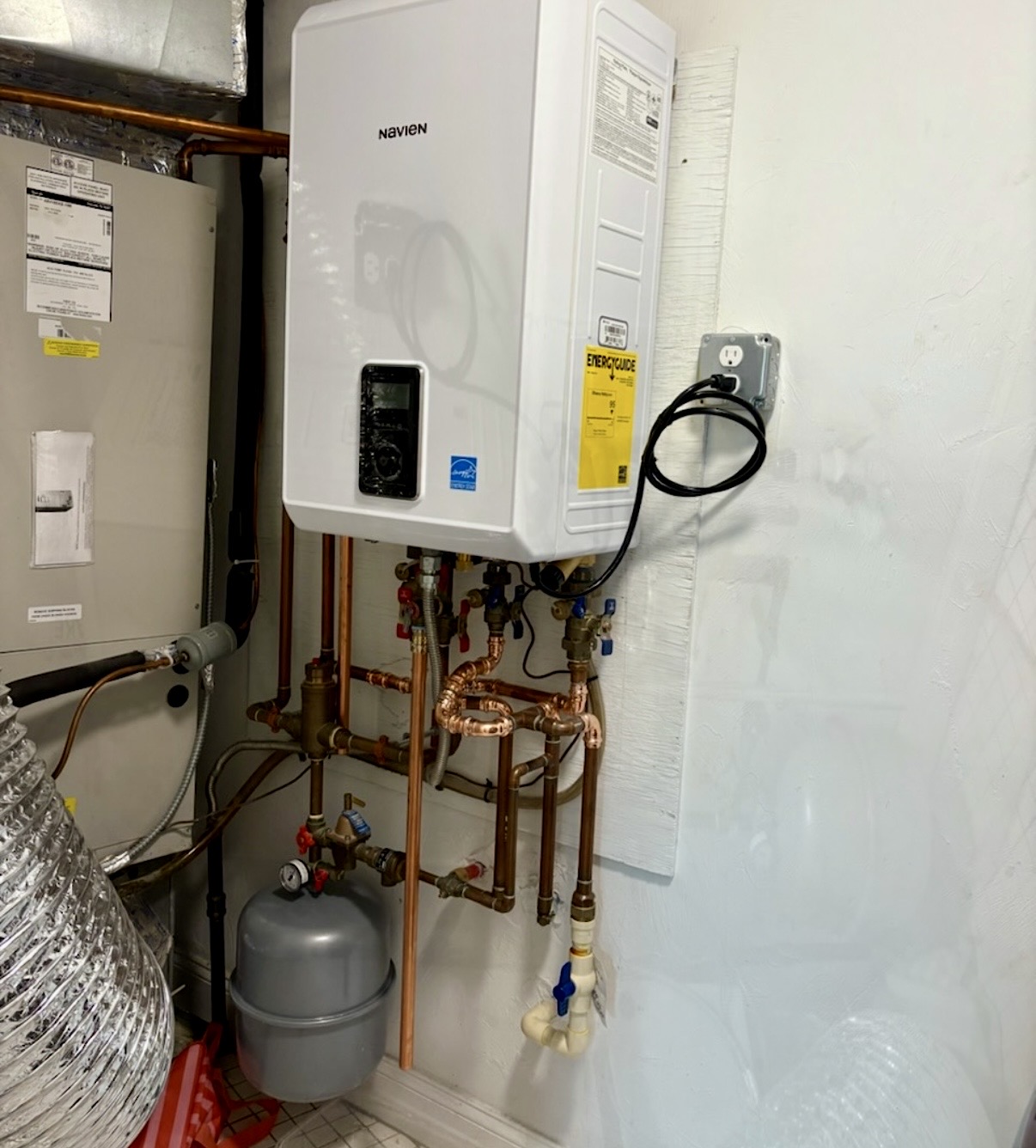
A combi boiler replaces your heating boiler and your water heater with a single wall-mounted unit. It handles both space heating and domestic hot water from one piece of equipment. The cost includes the unit itself, new venting, gas line modifications, connection to the heating distribution system, and domestic hot water piping. We primarily install Navien combi boilers, including the Navien NCB240 and NCB210 models, which are among the most reliable and efficient units available for Boston-area homes. Combi boilers are increasingly popular in Boston-area condos and smaller homes where mechanical room space is limited. For more details on combi boiler systems, see our combi boiler replacement in Boston.
Combi Boiler Conversion Cost (Replacing Boiler + Water Heater)
Cost Range: $10,000 – $18,000
This is the most involved residential boiler project we do. It means removing an existing boiler and a separate water heater or indirect tank, then installing a single combi boiler system in their place. The work typically includes disconnecting and removing the old equipment, running new gas piping sized for the combi unit, installing PVC venting, connecting to the existing heating zones, and plumbing the domestic hot water output to the home. The cost is higher because you are essentially replacing two appliances and reconfiguring the mechanical room. But the result is a single compact system that provides both heat and hot water, with less to maintain and less that can go wrong.
Oil-to-Gas Boiler Conversion Cost
Cost Range: $12,000 – $20,000+
Converting from oil heat to a gas boiler involves more than swapping equipment. The oil boiler and oil tank need to be removed and disposed of properly. A gas line needs to be run from the street or meter to the mechanical room. New venting is required. The heating distribution system may need modifications to work with the new equipment. Environmental considerations around oil tank removal add cost and complexity. Despite the higher upfront price, many homeowners make this switch because natural gas is cheaper per BTU than heating oil, and the equipment requires less maintenance over its lifespan.
What Makes One Boiler Job Cost Twice as Much as Another?
Even within the same boiler type, there is a lot of price variation between homes. Understanding what drives these differences helps you evaluate quotes and avoid surprises.
- Venting configuration: Switching from chimney venting to PVC direct venting adds material and labor. The length of the vent run, whether it goes through a wall or up through the roof, and the need for combustion air intake all affect cost.
- Gas line sizing: High-efficiency boilers and combi units often require a larger gas supply than the old equipment. If the existing gas line is undersized, it needs to be upgraded from the meter to the boiler. In some cases, the gas meter itself needs to be upgraded by the utility company, which adds lead time.
- Number of heating zones: Homes with more zones require more piping connections, circulators, and controls. A two-zone system is simpler than a six-zone system with individual thermostats.
- Condition of existing piping: Corroded or outdated piping that cannot be safely reused adds plumbing work. Homes with original galvanized steel or deteriorating copper connections often need piping updates as part of the boiler replacement.
- Basement access and layout: Tight staircases, low ceilings, and the need to carry heavy equipment through finished living spaces all increase labor time. Removing a 300-pound cast iron boiler from a basement with a 28-inch doorway is a different job than wheeling it out through a bulkhead.
- Electrical requirements: Modern boilers require dedicated electrical circuits for controls, ignition, and in some cases, powered circulation pumps. Older homes may need electrical panel work to accommodate this.
This is why flat-rate boiler pricing does not work. A company advertising "$4,999 boiler installations" either uses cheap equipment, excludes necessary work from the base price, or adds it all back as change orders once they are in your basement. Honest pricing reflects the actual scope of work required for your specific home.
Combi Boiler vs. Traditional Boiler: Which Makes Sense?
This is one of the most common conversations we have with homeowners during the quoting process. A combi boiler costs more upfront than a standalone boiler, but it eliminates the need for a separate water heater or indirect tank. Whether it makes financial sense depends on your home.
A Combi Boiler Usually Makes Sense When:
- Both your boiler and water heater are aging out at the same time
- You want to free up floor space in the basement or utility room
- You live in a condo, townhome, or smaller single-family home
- Your household has two or fewer bathrooms
- You want fewer pieces of equipment to maintain long term
A Separate Boiler + Tank May Be Better When:
- Your home has three or more bathrooms with heavy simultaneous use
- You have a large home with high heating loads
- Your current indirect tank is still in good condition and does not need replacing
- Your home has radiant floor heating that benefits from a dedicated boiler
- Long pipe runs from the mechanical room to fixtures would reduce hot water performance
We help homeowners work through this decision based on their actual home layout, family size, and what equipment is currently installed. There is no one-size-fits-all answer, and anyone who tells you otherwise is selling, not advising.
Boiler Replacement vs. Water Heater Replacement: Different Jobs, Different Costs
We get calls regularly from homeowners who are confused about whether they need a boiler or a water heater. It is an understandable mix-up since both involve heating water. But they serve completely different purposes, and the costs reflect that.
Boiler Replacement
- Heats water for your home heating system (radiators, baseboards)
- Connected to heating zones throughout the home
- Requires gas piping, venting, zone controls, and circulators
- Typical cost: $8,000 – $18,000
Water Heater Replacement
- Heats water for domestic use (showers, sinks, dishwasher)
- Standalone unit, not connected to heating system
- Simpler installation with fewer system connections
- Typical cost: $2,400 – $6,000
Boiler jobs cost more because they involve more equipment, more connections, and more complexity. The boiler is the central piece of your home heating infrastructure, and getting it right matters. For water heater pricing details, see our water heater replacement cost guide.
What to Watch for When Comparing Boiler Quotes
Getting multiple quotes is smart. But comparing them requires looking past the bottom-line number. Here is what to check:
Equipment Brand and Model
If one quote specifies a Navien NCB-240 and another just says "high-efficiency boiler," those are not comparable quotes. The brand and model tell you exactly what you are getting. Vague descriptions leave room for cheaper substitutions.
Scope of Work
Does the quote include removal and disposal of the old equipment? New venting? Gas line modifications? Permit fees and inspection coordination? A quote that excludes these items will grow once the work starts.
Licensing and Insurance
Massachusetts law requires plumbing and gas fitting licenses for boiler work. If a contractor cannot provide their license numbers on the quote, that is a red flag. Proper liability insurance protects you if something goes wrong during or after the installation.
Warranty Coverage
Boiler warranties vary by manufacturer and installer. Some manufacturers require the installer to be an authorized dealer for the full warranty to apply. Ask what the equipment warranty covers, how long the labor warranty lasts, and who handles warranty claims if something fails.
Timeline and Scheduling
If your boiler fails in January, how quickly can the contractor get there? Companies that specialize in this type of work typically carry common equipment in stock and can schedule faster than general contractors who handle everything from kitchen remodels to bathroom tile.
Mass Save Rebates for Boiler Replacement
Massachusetts homeowners may qualify for rebates through the Mass Save program when installing qualifying high-efficiency heating equipment. Condensing boilers with AFUE ratings of 95% or higher are typically eligible, though specific rebate amounts and requirements change from year to year.
The rebate process involves verifying that the installed equipment meets the efficiency thresholds and that the work was performed by a licensed contractor. Some utility companies within the Mass Save program offer additional incentives beyond the standard rebate.
We can help you determine whether your installation qualifies and what paperwork is needed. Rebates do not reduce the installation price at the time of service, but they can offset a meaningful portion of the cost after the fact.
Want an Exact Price Instead of a Range?
For many boiler replacements, we can provide accurate pricing over the phone once we understand your current setup. Photos of your existing boiler, the venting, and the general layout of your mechanical room are usually enough to give you a real number.
More complex projects like combi conversions or oil-to-gas switches typically benefit from a site visit so we can evaluate the full scope. Either way, you will get clear pricing before any work begins. No surprises.
Bottom Line
Boiler replacement in Boston is not cheap, and there is no way around that. The combination of high labor costs, strict licensing requirements, older homes with complicated layouts, and the inherent complexity of heating system work means prices are well above what national websites suggest.
The spread between $8,000 and $18,000 is real. A straightforward gas boiler swap on the lower end and a full combi boiler conversion on the upper end represent genuinely different scopes of work. Anyone offering a single price for "boiler replacement" without knowing anything about your home is guessing at best.
Equipment quality matters. A contractor who quotes $3,000 less because they use cheaper equipment is not saving you money. They are shifting the cost to future repairs and a shorter system lifespan.
When comparing quotes, look at the equipment specified, the scope of work included, the contractor's licensing, and how clearly they explain what the job involves. The lowest price is not the best price if it leaves out half the work.
Homeowners who want straight answers about what their specific boiler replacement will cost can call or text Boston Tank Swap. We will tell you what the job involves, what it costs, and why. No runaround.
Frequently Asked Questions
How much does a boiler replacement cost in Massachusetts in 2026?
Most homeowners across Massachusetts pay between $8,000 and $18,000 for a boiler replacement by a licensed plumber. Costs are highest in Boston, Cambridge, and the inner suburbs where labor rates and housing complexity push prices up. In more rural or lower-cost parts of the state, you may find pricing closer to the bottom of that range. The type of system, the condition of the existing installation, and whether venting or gas piping needs to be updated all affect where your project lands.
Why are some boiler replacements more expensive than others?
The biggest cost drivers are venting changes (switching from chimney to PVC direct vent), gas line upgrades, the number of heating zones, the condition of existing piping, and basement access. A boiler going into the same location with reusable venting and piping is much simpler than a combi conversion that requires removing two pieces of equipment, running new gas piping, and reconfiguring the mechanical room. Equipment grade also matters. Professional-grade units cost more upfront but typically last longer and require fewer service calls.
Is replacing a boiler a big job?
It depends on what is being replaced and how. A like-for-like swap where the new boiler goes in the same spot with minimal changes is a one-day job. Combi boiler conversions, oil-to-gas switches, or jobs that require new gas piping and venting modifications can take a day and a half to two days. Either way, it is a significant project that requires a licensed plumber, a permit, and a follow-up inspection by the local gas inspector. It is not a DIY job and not something to cut corners on.
Is it worth fixing a 17-year-old boiler?
It depends on the repair and the overall condition of the system. A boiler at 17 years is approaching the end of its typical lifespan, but it has not necessarily crossed a hard threshold. If the repair is minor (a circulator, a zone valve, an igniter) and the rest of the system is in solid condition, repairing it may make sense and buy you a few more years. If the repair is major, involves the heat exchanger, or comes on top of a string of recent service calls, replacement is likely the better financial decision. The general rule: if the repair cost exceeds a third of what a new system would cost, start pricing replacements.
Should I repair or replace my boiler?
Age, repair cost, and recent service history are the three factors to weigh. A boiler under 10 years old with a single identifiable issue is usually worth repairing. A boiler over 15 years old that has needed multiple repairs in recent seasons is usually a better candidate for replacement, especially if the upcoming repair is substantial. Mid-range scenarios, like a 12 to 15-year-old boiler needing a moderate repair, require a judgment call. In those cases, getting a replacement quote alongside the repair estimate gives you the full picture before you commit to either.
How much does a combi boiler replacement cost?
Replacing an existing combi boiler with a new combi unit in Boston typically costs between $8,000 and $13,000. This assumes the new unit goes in the same location and the existing venting and gas piping are compatible or require only minor modification. Converting from a separate boiler and water heater to a combi system for the first time costs more, typically $10,000 to $18,000, because it involves removing multiple pieces of equipment, reconfiguring piping, and often running new venting. Navien and Rinnai are the brands we primarily install for combi work in the Boston area.
Are high-efficiency boilers worth the extra cost?
For most Boston-area homeowners, yes. High-efficiency condensing boilers operate at 95% AFUE or above, compared to 80–84% for standard units. Given the length of New England winters and the cost of natural gas, the annual fuel savings add up meaningfully over a 15 to 20-year lifespan. The tradeoff is a higher upfront cost and slightly more complex venting requirements (PVC direct vent instead of chimney). Homes that heat heavily from October through April tend to see the strongest payback. If your home has very low heating demand or you plan to sell in the near term, the calculus is less clear-cut.
What size boiler does my home need?
Boiler sizing is based on the heating load of your home, which is calculated using factors like square footage, insulation levels, window area, ceiling height, and local climate. A rough rule of thumb for older New England homes is 30 to 60 BTU per square foot, but that range is wide enough to be misleading without a proper calculation. Oversizing a boiler is a real problem. It causes short cycling, reduces efficiency, and shortens equipment life. Proper sizing requires evaluating your specific home, not just applying a square footage formula. We size every installation based on the actual heating load rather than matching the old unit's output by default.
How long should a boiler last in Massachusetts?
A well-maintained gas boiler installed by a licensed plumber and serviced annually should last 15 to 20 years in Massachusetts. Some cast iron boilers run longer than that, though their efficiency declines over time. Combi boilers and modern condensing units typically fall in the 15 to 20-year range as well. Equipment quality at installation makes a significant difference. Professional-grade units from established manufacturers tend to last longer and require fewer repairs than bargain-tier equipment. Annual tune-ups, proper water treatment, and prompt attention to minor issues all extend system life.
Can I replace my boiler before it fails?
Yes, and there are real advantages to doing it on your own timeline rather than in an emergency. Planned replacements allow you to research options, get multiple quotes, choose the right equipment for your home, and schedule the work during a period when losing heat is less critical. Emergency replacements in the middle of a cold spell often mean less time to evaluate contractors, possible premium pricing for urgent scheduling, and decisions made under pressure. If your boiler is over 15 years old, running less efficiently, or has needed repairs in the past few years, it is worth getting a replacement quote before a failure forces your hand.
Are there rebates available for boiler replacement in Massachusetts?
Mass Save offers rebates for qualifying high-efficiency heating equipment, including condensing boilers that meet the program's efficiency thresholds. Rebate amounts and eligibility requirements change periodically based on utility program budgets and equipment standards, so the specific figures available at the time of your installation may differ from what was offered a year ago. Some utility providers within the Mass Save program offer additional incentives beyond the base rebate. We can help you determine whether the equipment selected for your project qualifies and what documentation is needed to submit a claim.
Looking for water heater replacement pricing instead? We handle those too.
Water heater replacement costs →Ready to Get Pricing for Your Boiler?
Fast, honest quotes. No pressure. Just clear answers about what your boiler replacement will cost.